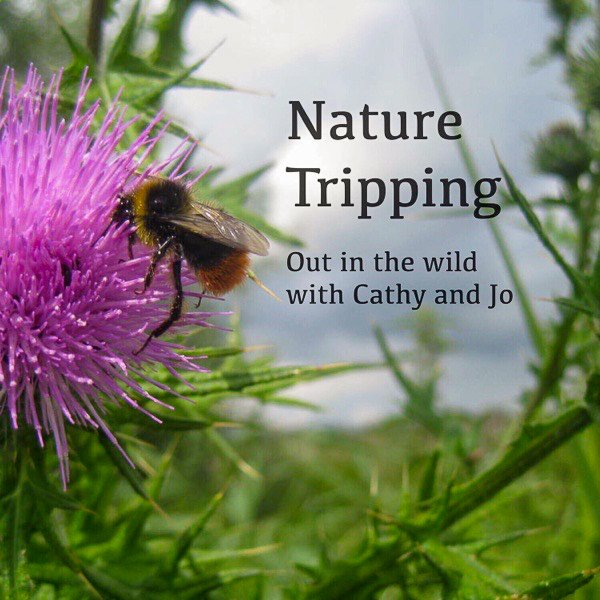
Jo and Cathy go out to immerse themselves in the sights and sounds of nature at various locations around the British Isles. Join them as they chat about the wildlife around them and listen in to their surroundings.
Nature Tripping Episode 34 - The Emperor Moth (Part 1)
· 59:54
Join Cathy and Jo on Norland Moor with moth expert Anthony Arak as we leave a moth trap out overnight and return in the morning to see who’s arrived. This episode is Part 1 of a two-part series devoted to exploring the life cycle of the majestic Emperor Moth. We listen to the experiences of four Bridestones Rewilded volunteers weaving their lives around some very hungry Emperor Moth caterpillars as they moult, grow, change colour and each spin themselves a silk cocoon. What is the difference between butterflies and moths? What’s it like to bring up caterpillars? How does a caterpillar transfor
Nature Tripping Episode 33 - Listening to Dobarz
· 44:31
This episode is a departure from the usual format and is an immersive listening experience of the sounds of Dobarz. Earlier in the year Jo and Cathy visited Eastern Poland, returning to an area near the Biebrza Marshes with an intense abundance and diversity of birds and other wildlife. Made from a series of continuous soundscapes recorded by Jo in a variety of habitats around the hamlet of Dobarz, the podcast begins with the dawn chorus, and continues through the day, including a chorus of fire-bellied toads and the underwater sounds of pond life, ending with a windy late afternoon soundscape
Nature Tripping Episode 32 - Climate as a Person
· 56:35
Jo and Cathy meet with Ashar Aslam, a post-doctoral climate researcher at Leeds University who studies tropical storms. They discuss Jo and Ashar’s 2025 collaboration as part of Leeds Cultural Institute’s Creative Labs programme. This brought scientists and artists together to think about climate change: Jo and Ashar decided to explore what happens if you recontextualise the climate as a living entity. How do people respond to this proposition? Is it too hard to imagine, or conversely, could it be a way of engendering more care for the climate, and prompting a shift in thinking that leads to p
Nature Tripping Episode 31 - Bryophytes and the Atlantic Rainforest
· 53:51
Bryophyte curious? Join Jo and Cathy in this episode of Nature Tripping for a walk through Hardcastle Crags in Calderdale with bryologist Johnny Turner. It might just look like green stuff but get close-up and the trees, rocks and streams are home to specialist species of mosses and liverworts indicative of Atlantic rainforest, as well as more common species once lost from the woods but now back in abundance. We learn what makes an Atlantic rainforest and how to tell if you’re in one. We find out about a long lineage of local bryologists from 1700s onwards and how their records reveal the impa
Nature Tripping Episode 30 - Regenerative Farming and Life in the Soil
Jo and Cathy meet Bailey for an introduction to Regenerative Farming and a discussion about the experimental field work he has been doing with the University of Oxford on the impact of different types of grazing management on biodiversity. Three different scenarios - conventionally grazed pasture, mob-grazed pasture, and passive restoration (where land is left untouched) - have been monitored for all sorts of biodiversity, with Bailey’s focus on the life beneath our feet. Soil might look pretty dull, but in fact it’s alive with invertebrates, and is a vital component of ecosystems. Can listeni
Episode 29 - Nature Tripping Goes East
· 54:03
In this episode Cathy and Jo travel east to Poland. Join them along the way as they cross borders and head into the primaeval forests of Bialowieza and the vast marshlands of Biebrza - both complex ecosystems, alive with the sounds of mammals, birds and amphibians. The variety and abundance of species they encounter are astounding but also give them pause to reflect on what Britain has lost and why. With thanks to Tomasz Jezierczuk of www.wildpoland.com
Nature Tripping Episode 28 - Grassland Fungi
· 58:01
Jo and Cathy spend this episode with National Trust project officer and ecologist Steve Hindle on the slopes of Calderdale, in what looks like an ordinary field… but isn’t. They discuss the fascinating lives of fungi and their vital but often overlooked role in the ecosystem, not only as decomposers or parasites, but also as symbiotic partners engaged in a range of very sophisticated relationships with plants. Steve’s partner Sarah Flood scours the field for waxcaps, pinkgills, clubs, corals and earthtongues. Each has their own ecological niche, and all are indicators of ‘ancient grassland’, a
Nature Tripping Episode 27 - The Curlew
· 52:18
If you go up to Calderdale’s rough pasture and moorland during the spring and early summer you might encounter a variety of breeding birds – small ones like meadow pipits and skylarks and larger ones like oyster-catchers, golden plover, snipe and lapwings. There is perhaps none more distinctive though, both in its look and sound than the curlew – a large, elegant, brown wader with a very long curved beak and a strange, some say ghostly, bubbling song. Whilst numbers across Britain are going down and down, here in the South Pennines, we still experience their arrival every spring and seem to be
Nature Tripping Episode 26 - Sounds from a Hebridean Coast
· 44:40
It’s always a pleasure to hear from our listeners and on occasion people have asked for an episode dedicated purely to nature sounds. This is one such episode. It’s a compilation of ambient field recordings made around the coastline of the Hebridean island of Tiree. Slow radio indeed, and we recommend listening on headphones. This is an energetic and vibrant landscape. You can immerse yourself in the elemental sounds of waves and wind, and experience a wide variety of birdlife. We begin the episode with the faint cry of sea eagles high in the sky, then move back to the seashore, plunging down
Nature Tripping Episode 25 - House Martins
· 50:36
A stone’s throw from the river in Hebden Bridge town centre Jill and Kathryn make a discovery under their eaves: House Martins have arrived. A summer of ups and downs follows and we track events over the year to learn more about the lives of these ‘epic’ little migrant birds, and how to love a ‘pile of poop’. We also find out more about Britain’s other Spring arrivals swifts, swallows and sand martins, and how to tell them apart.
Nature Tripping Episode 24 - Rewilding
· 50:09
What does rewilding in the British Isles mean, how do you start it off, and what happens when you do? In this episode we visit the 3000 acre Broughton Hall estate in Yorkshire with Rewilding Britain’s Alastair Driver to see how nature is bouncing back. A wide range of interventions and actions are now underway on land that was conventionally farmed for sheep and crops until very recently. Whether it’s tree planting, leaky dam construction, the introduction of ecosystem engineers (beavers), or just letting nature do its thing and embracing ‘scruffication’, the benefits for wildlife, the environ
Nature Tripping Episode 23 - Building Resilience
· 53:24
In an episode centred on climate change and community resilience, Jo and Cathy stay in their local town - Todmorden - to chat with Barbara Jones, a pioneer of natural building methods. Sustainable materials including clay, lime, wool, wood fibre and straw as well as stone and timber come into their own. We find out practical steps we can all take in our homes, whether they are old or new, to improve breathability (thus minimising unwanted condensation and mould), reduce heat-loss, and shield indoor spaces from increasing outside temperatures. Barbara also tells the story of how the local colle
Nature Tripping Episode 22- Natterjack Toads
· 51:42
In this episode we visit Gronant and Talacre dunes with Mandy Cartwright from the Amphibian and Reptile Conservation Trust to investigate the only Welsh population of Natterjack Toads, re-introduced after the Second World War. The shallow pools (scrapes) and sandy burrows provide a perfect habitat, but development pressures, predation, human activity and climate change mean life for these small, yellow-striped amphibians is precarious. How exactly do Natterjack Toads live, and what are landowners and conservationists doing to ensure they keep croaking long into the night? With thanks also to Y
Nature Tripping Episode 21 - The New Forest
· 49:38
What does the future hold for the ancient trees of the New Forest? Join us inside the Forest, at Denny Wood, for an in-depth discussion with ecologist Adrian Newton and naturalist Lynn Davy. Long term ecological monitoring of the woodlands is revealing the rapid and dynamic transformation of much-loved habitats that have existed for thousands of years. Why is this happening? Who are the winners and losers? How should we assess the condition of an ecosystem that is changing so rapidly, and how do we go about making conservation management decisions in such an ecologically and culturally complex
Nature Tripping Episode 20 - The Mountain Hare
· 46:31
Cathy and Jo join wildlife biologist and hare expert Carlos Bedson on location in the Dark Peak to find out more about the only mountain hares in England. Their ancestors arrived on a train from Scotland! 500 metres up on the moor looking out for ‘white fluffy blobs’ Carlos explains more about the likes and dislikes of this amazing creature, his long-term survey work to map the extent and size of the Peak District population, how to go about seeing one, and what we can do to ensure their continued survival.
Nature Tripping Episode 19 - The Great Yellow Bumblebee
· 46:34
Join Jo and Cathy for a Gaelic adventure to find out more about one of Britain’s rarest bumblebees – the Great Yellow Bumblebee (Bombus distinguendus). We meet ecologist Janet Bowler on the dunes to discover more about what one small island has done to keep its special bee buzzing. Charlotte Vale and Molly Knowles contribute readings in Gaelic from Beataidh Banrigh Super-Bee, a story book created by the children of Tiree.
Nature Tripping Episode 18 - Poetry and Birds in the Industrial Revolution
· 50:00
“Come, summer visitant, attach to my reed roof your nest of clay”. In this episode Jo and Cathy look back to the Victorian era with poetry scholar Clara Dawson. Clara introduces us to poems by Charlotte Smith, William Wordsworth, Christina Rosetti, Edward Thomas and Thomas Hardy, and the interweaving of human and bird worlds. What is revealed about the poets’ relationships with nature as industrialisation took grip across the country? And how might these poems spark our own imaginations, both in terms of experiencing nature’s previous plenitude, and in forging new relationships with the living
Nature Tripping Episode 17 - A Shropshire Graveyard
· 43:13
This episode takes Cathy and Jo to Shropshire to explore a church graveyard. Harriet Carty, from the charity Caring for God’s Acre, explains all about these oases of species-rich grassland, and how to manage them. As well as meeting some of the plants and other creatures that make the graveyard their home - bats, rooks, butterflies, bees - they have a close encounter with an ancient yew tree, and find out how important burial grounds are to people, past and present.
Nature Tripping Episode 16 - Little Woolden Moss
· 44:36
Following on from Episode 15 Jo and Cathy make a return to the peatlands, this time to a lowland raised bog on the outskirts of Manchester and Salford. Little Woolden Moss formed over thousands of years but was almost totally destroyed in the 1990s by peat extraction – it became a barren, lifeless place, swirling with clouds of black dust. Jo and Cathy meet Jenny Bennion from the local Wildlife Trust and Dave Steel, a birdwatcher and bog volunteer, to find out how it's now being brought back to life and becoming a wildlife haven once again.
Nature Tripping Episode 15 - Peat Bogs
· 46:39
Jo and Cathy venture into squelchy upland territory in search of sphagnum moss, a key species of the peat bog. Discovering that a third of the UK was once bog or fenland, and that most has now been degraded, they find out what needs to be done to restore these watery wonderlands and their carbon capturing powers. Up in Galloway they meet environmental artist Kerry Morrison and learn all about a tasty project which reconnects a local community with their peatlands.
Nature Tripping Episode 14 - The Corncrake
· 47:00
Jo takes a trip up the west coast to the Inner Hebrides to join Cathy who is helping with the RSPB’s annual corncrake census on the Isle of Tiree. Locating these elusive birds involves listening for calling males in the dead of night. Join Jo and Cathy on a midnight journey to track them down, followed by an in-depth conversation with RSPB officer John Bowler who shares the story of the corncrake, why the Inner Hebrides remains one of the UK’s last strongholds for these birds, and what is being done to look after future generations.
Nature Tripping Episode 13 - Learning Birdsong in the Coronavirus Lockdown - Part 4
· 43:48
Jo and Cathy resume learning birdsong in lockdown, this time tuning into the calls of the blue tit, great tit and coal tit. With Spring fast approaching, gardens, parks and woods are alive with the sounds of these three common UK tit species, but it’s easy to be confounded by all their chirping and tweeting, and treat them as background noise. In this episode Jo and Cathy set about investigating their individual sonic signatures and explore how to distinguish and disentangle (most of the time!) one species from each other. (Blue Tit @ 4m 23sec; Coal Tit @ 16m 35sec; Great Tit @ 23m 45sec)
Nature Tripping Episode 12 - The River Colne
· 52:02
Setting out to explore the River Colne, Jo and Cathy start at its source on the edge of the moors and journey downstream through urban West Yorkshire to its confluence with the River Calder. Their trip takes in weirs, walls, abandoned mills, industrial pollution, combined sewer overflows, liminal space and river life. As well as exploring the historical and present day human impacts on the river, they begin to question more deeply our relationship with rivers and the role they can play in our lives.
Nature Tripping Episode 11 - The Grouse Moor
· 48:18
Vast swathes of Britain's upland are currently managed for grouse shooting. As the official start of the shooting season kicks off (12th August) Jo and Cathy finally decide to confront this controversial topic. Listen in from their local grouse moor to find out about the history of this peculiarly British pastime, the ecological and environmental consequences of managing the moors in this way, the range of stakeholders involved, and possibilities for the future.
Nature Tripping Episode 10 - Learning Birdsong in the Coronavirus Lockdown - Part 3
· 40:00
In this episode we take the opportunity to meet the warblers, millions of whom travel thousands of miles every year, returning to the UK to breed, and sing - possibly in a tree near you! We then reveal the often overlooked acoustic charm of the long tailed tit. [Timings: Willow Warbler @ 2mins 19secs; Blackcap @ 13mins 45secs; Long tailed Tit @ 25mins 03secs]