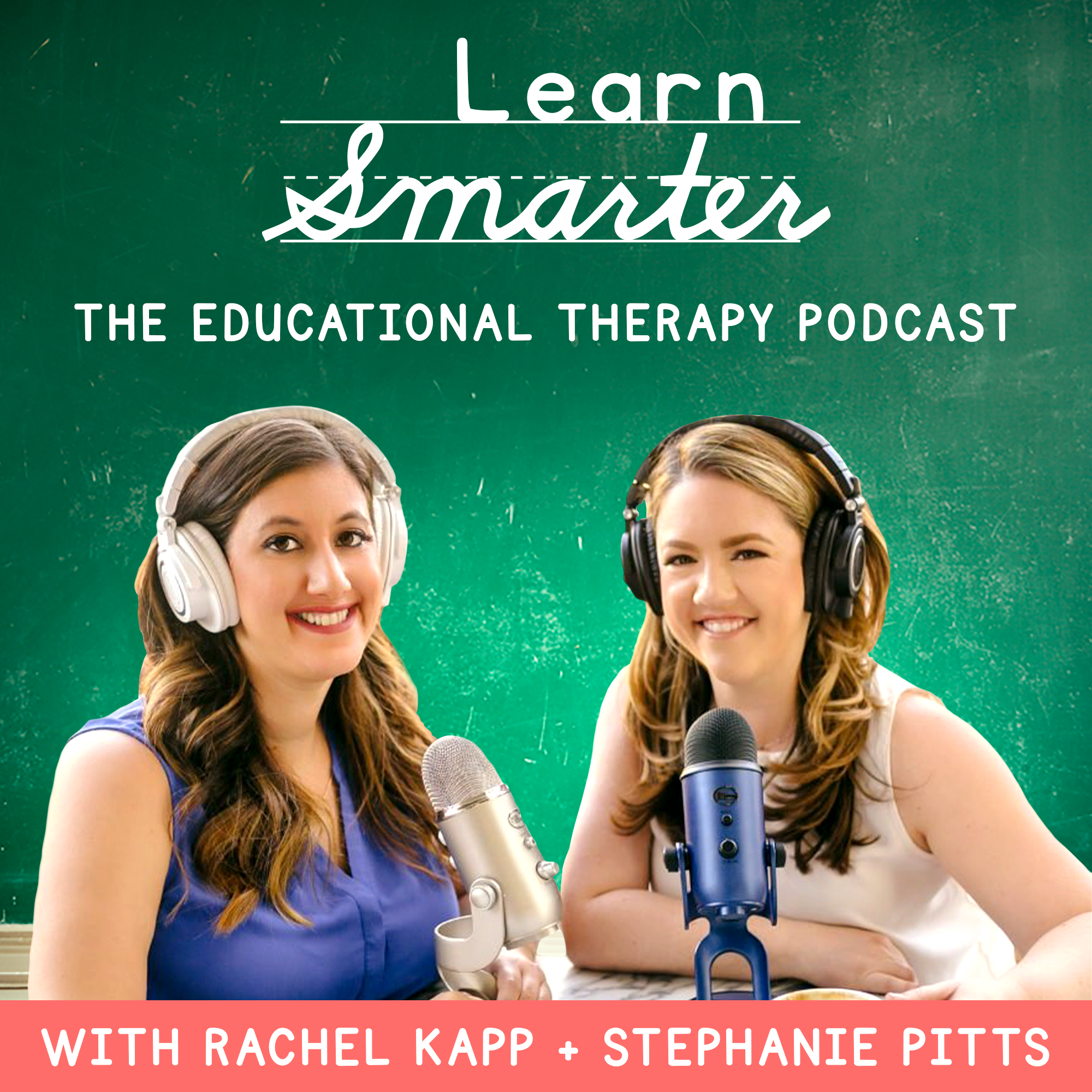
Cost is one of the most common concerns families have when considering educational therapy. In this episode, Rachel Kapp, M.Ed., BCET, and Stephanie Pitts, M.Ed., BCET, explore how to think about the cost of educational therapy through the lens of value rather than price alone. They discuss what families are truly investing in, the potential cost of waiting, and why educational therapy is designed to build long-term independence. They also share alternative ways to support learners when educational therapy isn’t the right fit. This conversation offers practical guidance to help families make a
Rachel Kapp, M.Ed., BCET, and Stephanie Pitts, M.Ed., BCET re-air an important episode from early days. Educational therapy can be magical in that it allows students to tap into their potential. Yet oftentimes, the potential parents and teachers see in a learner is a heavy burden and source of conflict in family homes. In today’s episode, Rachel & Steph talk about potential from the perspective of parents, students and educational therapists. Support us on Patreon: https://www.patreon.com/learnsmarterpodcast How to connect with us: Join our e-mail list Rachel’s Kapp Educational Therapy Group w
Rachel Kapp, M.Ed., BCET, and Stephanie Pitts, M.Ed., BCET explore one of the most common—and misunderstood—academic struggles: why learners resist revising their writing. They break down the real reasons revision feels so hard, including executive functioning overload, emotional attachment to first drafts, vague feedback, and the belief that revision means starting over. Rather than framing revision as a motivation problem, the episode reframes it as a skills and systems issue. They share ideas that can make revision more approachable, more concrete, and far less overwhelming for learners of
Rachel Kapp, M.Ed., BCET, and Stephanie Pitts, M.Ed., BCET explore why so many learners rush through their work—and why it’s rarely about laziness or apathy. They unpack how executive functioning challenges, anxiety, time blindness, and cognitive load contribute to rushing, and explain why telling learners to “slow down” often doesn’t work. The episode reframes rushing as a skills-based issue and shares practical, supportive strategies that help learners build accuracy, awareness, and confidence without increasing pressure or shame. Support us on Patreon: https://www.patreon.com/learnsmarterpo
Rachel Kapp, M.Ed., BCET, and Stephanie Pitts, M.Ed., BCET share some life updates on this episode! They also chat about systems versus tools and how both are required to symbiotically work together. Support us on Patreon: https://www.patreon.com/learnsmarterpodcast How to connect with us: Join our e-mail list Rachel’s Kapp Educational Therapy Group website Steph’s My Ed Therapist website @learnsmarterpodcast, @kappedtherapy, @myedtherapist
Rachel Kapp, M.Ed., BCET, and Stephanie Pitts, M.Ed., BCET explore why traditional consequences often fail for kids with learning differences and/or executive functioning skills challenges—and what actually helps instead. They unpack the critical idea that consequences only work when a child already has the underlying skills, and explain how repeated punishment can increase stress, shutdown, and avoidance rather than learning. They reframe “misbehavior” as a skills gap and offer practical alternatives rooted in curiosity, explicit skill-building, and collaborative problem-solving. Support us o
Rachel Kapp, M.Ed., BCET, and Stephanie Pitts, M.Ed., BCET revisit a previous episode to discuss the concept of failing forward. They talk about why summer is the perfect chance to prioritize this idea, how to involve parents in the process when appropriate, and the importance of planning for “failing”. They share the transformation that can occur with prioritizing this conversation and plan and for what type of learners benefit from this goal. Make sure to listen to the end as they share a simple framework to help learners plan to fail forward. Support us on Patreon: https://www.patreon.com/l
Rachel Kapp, M.Ed., BCET, and Stephanie Pitts, M.Ed., BCET explore a common parent belief that they should “try everything else first” before seeking outside support. They explore why this hesitation shows up, including fears of overreacting, and the pressure to solve challenges independently. Rachel & Stephanie also explain the hidden costs of waiting—academically, emotionally, financially, and relationally—and why time is a critical factor in building executive functioning skills. They emphasize that educational therapy isn’t a last resort but an effective parallel path that helps learners t
Rachel Kapp, M.Ed., BCET, and Stephanie Pitts, M.Ed., BCET explore whether music helps or hurts a learner’s ability to focus. They break down why some students work better with background sound, why others become more distracted, and how the type of task—and the type of music—matters. The episode includes simple strategies families can use to help learners identify what supports their focus best and when silence, sound, or music is the right choice. Support us on Patreon: https://www.patreon.com/learnsmarterpodcast How to connect with us: Join our e-mail list Rachel’s Kapp Educational Therapy
Rachel Kapp, M.Ed., BCET, and Stephanie Pitts, M.Ed., BCET unpack why executive functioning work is about increasing a learner’s capacity—not enforcing compliance. They break down the difference between behavior that comes from pressure and behavior that comes from internal skills, and they explain why real progress happens only when learners develop planning, regulation, and flexible thinking. This episode helps Smarties understand how shifting from “Do it because I said so” to “Let’s build the skills you need” leads to independence and long-term success. Support us on Patreon: https://www.pa
In this re-air of episode 190, Rachel Kapp, M.Ed., BCET, and Stephanie Pitts, M.Ed., BCET discuss how the learners they work with at Kapp Educational Therapy Group and My Ed Therapist ALL have some emotional response to tasks that they avoid. Rachel and Steph dig into this–they talk about what it means, what it looks like, how to figure it out through getting curious, and some examples from their own experiences. Support us on Patreon: https://www.patreon.com/learnsmarterpodcast How to connect with us: Join our e-mail list Rachel’s Kapp Educational Therapy Group website Steph’s My Ed Therapist
Rachel Kapp, M.Ed., BCET, and Stephanie Pitts, M.Ed., BCET explore a common concern they hear from parents: the fear that seeking support for their learner will lead to stigma—within their family, cultural community, or even in how their child sees themselves. They unpack why these fears are so prevalent and why they make complete sense, especially for families navigating cultural messages around achievement, privacy, and struggle. They also reframe the conversation to demonstrate that getting help is not a sign that something is “wrong,” but that it can be viewed as a proactive step toward gi
Rachel Kapp, M.Ed., BCET, and Stephanie Pitts, M.Ed., BCET discuss why learners get stuck in decision-making and what they need in order to move on. They break down the executive functioning skills required to make choices, why overwhelm and perfectionism create paralysis, and how adults can help learners gain clarity and confidence. Support us on Patreon: https://www.patreon.com/learnsmarterpodcast How to connect with us: Join our e-mail list Rachel’s Kapp Educational Therapy Group website Steph’s My Ed Therapist website @learnsmarterpodcast, @kappedtherapy, @myedtherapist
Rachel Kapp, M.Ed., BCET, and Stephanie Pitts, M.Ed., BCET welcome Ellen Galinsky to discuss her latest book The Breakthrough Years. Ellen is a “research adventurer,” parenting expert, president of the Families and Work Institute, former Fred Rogers Parenting Expert, a civic scientist and author. She talks about how her fundamental core question of “How can we best help kids learn and thrive?” has driven her career. She shares how she prioritizes what kids want to know–that they want us to understand them. She talks about how teens need opportunities for positive risks and how they don’t want
Rachel Kapp, M.Ed., BCET, and Stephanie Pitts, M.Ed., BCET revisit an episode from the early days to talk about highly gifted students. When we think of neurodiversity or learning differences, we often think of students who have challenges such as dyslexia, ADHD, anxiety, etc. However, students with high intellect require a unique learning approach as well. Listen in to hear us discuss the typical challenges highly gifted students face and our ideas for how to overcome them. Support us on Patreon: https://www.patreon.com/learnsmarterpodcast How to connect with us: Join our e-mail list Rachel’s
Rachel Kapp, M.Ed., BCET, and Stephanie Pitts, M.Ed., BCET explore one of the most common questions families express when starting educational therapy: the desire for quick results. They discuss why this is such a universal question, what parents are actually asking for, and how professionals can guide families toward a clearer, calmer understanding of the educational therapy process. Support us on Patreon: https://www.patreon.com/learnsmarterpodcast How to connect with us: Join our e-mail list Rachel’s Kapp Educational Therapy Group website Steph’s My Ed Therapist website @learnsmarterpodcast
Rachel Kapp, M.Ed., BCET, and Stephanie Pitts, M.Ed., BCET break down one of the most persistent myths in school, work, and home life: the idea that multitasking is a skill. The science is clear — the brain cannot actually multitask. What the brain does is rapidly switch between tasks, and that switching is far more costly than most people realize. Rachel and Stephanie discuss what is really happening in the brain when learners try to “do it all,” why multitasking leads to more mistakes and slower progress, and what strategies support executive functioning and stronger learning habits. Support
Rachel Kapp, M.Ed., BCET, and Stephanie Pitts, M.Ed., BCET discuss the role of the educational therapist as a middleman. We dig into the middleman role educational therapists often end up playing — between parents, teachers, clinicians, tutors, and everyone else on a child’s support team. They discuss the benefits and challenges of this role and how to keep boundaries that are in alignment with your values. Support us on Patreon: https://www.patreon.com/learnsmarterpodcast How to connect with us: Join our e-mail list Rachel’s Kapp Educational Therapy Group website Steph’s My Ed Therapist websi
Rachel Kapp, M.Ed., BCET, and Stephanie Pitts, M.Ed., BCET welcome Claudia, a former parent from My Ed Therapist, to the podcast. Claudia shares her journey with her daughter, Emma, who is autistic, has ADHD, and has Pathological Demand Avoidance (or “Persistent Demand for Autonomy”). Claudia shares about the impact of these diagnoses on her relationship with Emma and the family. She shares about how Stephanie’s rapport had a tremendous impact on Emma’s ability to be more flexible. She shares about the difficult decision to transition schools and the importance sports had for Emma. They chat a
In this re-air of episode 169 (originally aired August of 2021), Rachel Kapp, M.Ed., BCET, and Stephanie Pitts, M.Ed., BCET talk with Dr. Sharon Saline, author of What Your ADHD Child Wishes You Knew: Working Together to Empower Kids for Success in School and Life. Dr. Saline discusses her goal of improving the connection between parents and learners with ADHD through improving conversation. She walks them through her 5C’s of parenting, which are self-control, compassion, collaboration, consistency, and celebration. They also dive into a conversation about medication. Support us on Patreon: ht
Rachel Kapp, M.Ed., BCET, and Stephanie Pitts, M.Ed., BCET are back to chat about commitment overwhelm. Families often say things like “We’re too busy right now” or “Let’s wait until next semester.” But sometimes those words aren’t about scheduling — they’re about commitment overwhelm and that heavy feeling that starting something new, even something helpful, might just be too much to handle. In this episode, Rachel and Steph unpack what commitment overwhelm really is, why it shows up for both learners and families, and how to meet it with empathy and structure instead of pressure. Support us
Rachel Kapp, M.Ed., BCET, and Stephanie Pitts, M.Ed., BCET celebrate 400 episodes of Learn Smarter! In this special milestone episode, they reflect on what they’ve learned over the years—from their learners, their guests, their listeners, and each other. Rachel and Steph share their biggest takeaways about growth, executive functioning, and the parenting journey, and they look back on some of their favorite moments and funniest behind-the-scenes stories. They also take time to thank the Learn Smarter community for showing up week after week to learn, reflect, and grow together. This episode is
Rachel Kapp, M.Ed., BCET, and Stephanie Pitts, M.Ed., BCET welcome back Dr. Karen Wilson, a pediatric neuropsychologist, founder of ChildNexus, and podcaster of Diverse Thinking, Different Learning. She teaches Rachel and Steph about early indicators that could impact learners. She shares how the early signs are used as information and early signs should be observed in relationship to their peers. She talks about the importance of listening to parent/teacher gut and intuition and they have a quick discussion about the true impact of COVID. Support us on Patreon: https://www.patreon.com/learnsm
Rachel Kapp, M.Ed., BCET, and Stephanie Pitts, M.Ed., BCET talk about the lost art of boredom and why it’s so essential for developing executive functioning skills. It’s well documented that kids, learners, and adults are really overscheduled and overstructured (and we really do not like and have a problem tolerating being bored). Rachel and Steph explore what boredom actually does for the brain, how it supports creativity, problem-solving, and self-reflection, and why tolerating “nothing to do” is an important life skill. They share practical strategies for helping learners relearn how to res
Rachel Kapp, M.Ed., BCET, and Stephanie Pitts, M.Ed., BCET discuss how tricky the decision to start educational therapy when parents receive mixed feedback from the other adults in their learner's life. They chat about why a lack of consensus can easily emerge and the questions you can ask yourself to help you determine if you should start educational therapy. Support us on Patreon: https://www.patreon.com/learnsmarterpodcast How to connect with us: Join our e-mail list Rachel’s Kapp Educational Therapy Group website Steph’s My Ed Therapist website @learnsmarterpodcast, @kappedtherapy, @myedth